If your child plays rugby in South Africa, you have probably heard the word BokSmart mentioned by a school coach, a club official, or another parent on the sideline. Many parents recognise the term without fully understanding what it means in practice. That gap in understanding is worth closing, because knowing what BokSmart is, what it covers, and why it represents the baseline standard for coaching young players gives you the tools to ask the right questions and make properly informed decisions about who is working with your child and how they are doing it. At IBIC Rugby, BokSmart certification is held by Brad and it actively shapes the design and delivery of every session at False Bay Rugby Club in Constantia.
What BokSmart Is
BokSmart is the national rugby safety programme of South Africa, developed and administered by the South African Rugby Union in partnership with the Chris Burger Petro Jackson Players’ Fund, a fund established in memory of two players who sustained serious spinal injuries on the field. The programme was created with a specific purpose: to reduce serious injuries in South African rugby by ensuring that coaches, referees, and team officials at every level are properly trained in safe playing techniques, emergency response procedures, and age-appropriate session design.
BokSmart is not a basic first aid certification or a general sports safety course. It is a comprehensive, rugby-specific programme that covers safe scrummaging technique, progressive tackle development, how to recognise and manage a potential spinal injury on a rugby field, and how to structure contact sessions in a way that is physically appropriate for each specific age group. Holding BokSmart certification means that a coach has completed this training and is applying its principles in their work with players, and it is the standard that every coach working with young rugby players in South Africa should meet without exception.
Why It Matters More at Junior Level
The physical demands, risks, and developmental needs of rugby change significantly as players grow. What is appropriate and safe for a 16-year-old player is often completely inappropriate for a 9-year-old, and this is not simply a question of size and strength.
It is a question of bone density, muscular development, coordination, and the psychological readiness to engage in contact situations. BokSmart-certified coaches understand these differences and structure their sessions accordingly. This includes how and when to introduce contact, how to progress tackling safely through a series of developmental stages, and how to recognise when a young player is not physically or emotionally ready to move to the next step.
Parents across Constantia, the Southern Suburbs, and greater Cape Town who are looking at private rugby coaching options for their child should treat BokSmart certification as a non-negotiable baseline rather than a nice-to-have. It is the clearest signal that a coach puts the physical wellbeing of young players first.
How BokSmart Shapes Every IBIC Rugby Session
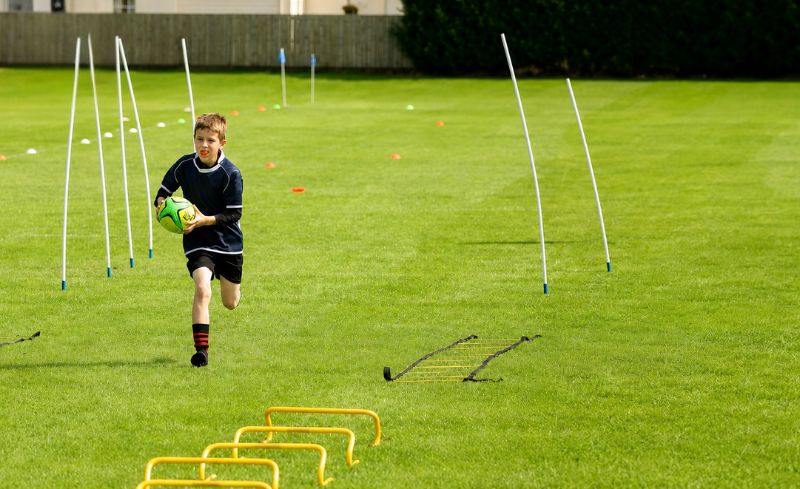
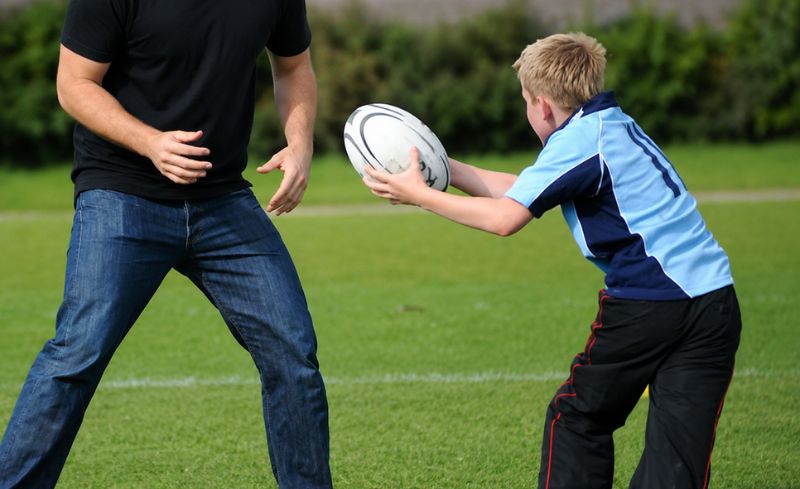
At IBIC Rugby, BokSmart principles are built into the design and delivery of every session that Brad runs at False Bay Rugby Club in Constantia. Contact is introduced progressively, starting with body position work and low-intensity contact exercises before any full tackling is introduced. The pace of that progression is determined by each individual young player rather than by a fixed timeline. Warm-ups are structured to prepare the body specifically for the demands of the session.
Skill progressions are matched carefully to each player’s age and current developmental stage. Throughout every session, Brad talks openly with young players about what safe technique looks and feels like, because a player who understands the reasoning behind a safety principle will apply it under pressure in a way that a player who has simply been told what to do will not. This distinction between understanding and compliance matters enormously in contact situations where instinct takes over and technique must be deeply embedded to hold.
Questions Every Parent Should Ask
Before your child starts private rugby coaching with anyone in Cape Town or the Southern Suburbs, there are three questions worth asking directly. The first is whether the coach holds BokSmart certification. This should be a clear and unqualified yes, and if the answer is vague or the question is deflected, that is worth noting. The second question is how the coach approaches introducing contact to young players who are new to it.
The answer you are looking for describes a gradual, progressive process that prioritises correct body position and genuine comfort before intensity is increased. The third question is how the coach tailors sessions for players of different ages and abilities, because a coach who applies the same approach to a 6-year-old beginner and a 13-year-old club player does not have a genuinely individualised coaching method.
At IBIC Rugby, Brad is always willing to talk through his qualifications, his approach, and his session design with parents before their child’s first session. Transparency about how coaching is delivered is part of how trust is built with the families who bring their young players to False Bay RFC in Constantia.
Safe Rugby Is About More Than Preventing Injury
Safety in rugby is not only about preventing serious physical harm, as critical as that goal is. It is also about creating an environment where young players feel genuinely secure, where they know the coach will not push them into a situation they are not ready for, and where learning contact rugby feels empowering rather than frightening. When young players feel safe, they commit to tackles with correct technique rather than flinching at the last moment, which is actually one of the most common causes of injury in junior rugby.
A coaching environment that is genuinely safe, in both the physical and psychological sense, is one where young players develop faster, enjoy the game more, and are far more likely to still be playing and thriving in the sport several years from now. That is the environment IBIC Rugby works to create at every session at False Bay Rugby Club in Constantia, and it is why safety is not treated as a compliance requirement but as the foundation on which all coaching is built.
Book your child’s first session at False Bay Rugby Club, Constantia. Safety, skills, and confidence in every session.